Message from the President

Dear colleagues and friends,
Over the past few months, the Ipnet Board has been working intensively on Ipnet’s new strategic plan for the coming years. As part of this process, we have had fruitful discussions with all our working groups. We are truly impressed by the breadth, quality, and dedication of the work being carried out across the network.
Ipnet’s scientific, clinical, educational, and collaborative activities continue to grow stronger, giving us great confidence in the future of our community. In parallel, we are working with our office, studio12, to restructure and update the Ipnet website with current information. This process has taken longer than expected, but it remains an important priority.
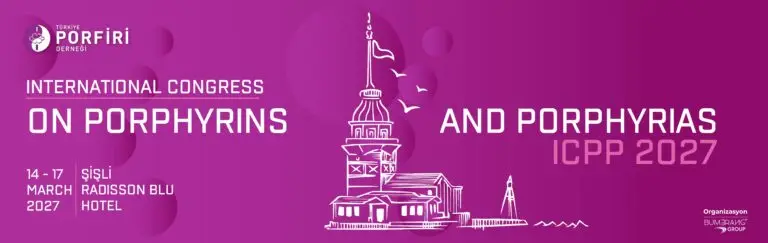
Due to the current geopolitical situation in the Middle East and the uncertainty this creates for international travel and planning, we have had to postpone the International Congress on Porphyrins and Porphyrias (ICPP). The congress will now take place on 14–17 March 2027. This was not an easy decision, but we believe it is the most responsible way to ensure a successful and inclusive meeting for all participants.
We are continuing to monitor the situation closely and will share information about the conference venue before the summer break. In the meantime, we encourage you to reserve the new dates in your calendars.
Together with the Scientific Board, we are working to develop an exciting, high-quality scientific programme. We are confident that ICPP 2027 will provide an excellent opportunity for scientific exchange, collaboration, and inspiration within the porphyria community.
We would also like to remind all full members that the invitation to nominate candidates for the Ipnet Board for the 2027–2028 term has now been sent out. We sincerely hope that representatives from full Ipnet members centres will consider taking an active role in shaping the future leadership of the network.
Finally, due to the postponement of ICPP, we will hold a virtual General Assembly on 4 December 2026. In addition to the formal meeting, we are planning a scientific programme and a communication session that we hope will be of interest to all members. More information will follow in the coming month, but for now we encourage you to save the date.
Thank you all for your continued commitment, cooperation, and support of IPNET.
Warm regards,
Eliane Sardh
Ipnet President
Guidelines for Managing Acute Porphyria

The International Porphyria Network are delighted to highlight the successful publication of internationally agreed guidelines on the management of Acute Porphyrias based on a systematic evaluation of the available evidence: Edel Y, Stein PE, Kawtharany H et al. Guidelines for the management of acute porphyria: recommendations from the International Porphyria Network. Lancet Haematol. 2026 May;13(5):e338-e350.
This follows several years of hard work involving international clinical and laboratory experts, patient representatives and experts on guideline development from the University of Kansas, with funding and support from Ipnet.
The project was led by Drs Yonatan Edel, Pennelope Stein and Sverre Sandberg and we are delighted that Yoni had agreed to answer some questions on the project and his personal experience.
(Interview by Mike Badminton).
Q: Why were guidelines needed for the acute porphyrias?
A: When we first embarked on this project, our primary question was: Who is the intended audience? We collectively agreed that while experts often manage the disease based on personal experience, peer discussions, and existing data, the rarity of acute porphyria presents a unique challenge. Most patients worldwide do not have immediate access to a specialized porphyria centre. Therefore, our first priority was to provide a clear, reliable roadmap for non-expert clinicians who may only encounter one or two cases in their entire career and require immediate, expert-backed guidance for management.
However, as the project progressed, we realized that the experts themselves had much to gain. The process highlighted just how scarce high-level evidence truly is in this field. By collaborating with a large panel, we learned what most specialists do in practice, as well as the innovative approaches some take. This is why every guideline is accompanied by detailed remarks and discussions and these insights into “expert logic” make the document a valuable resource even for those seasoned in the field.
Finally, we view these guidelines as a living document. This first edition has been a powerful diagnostic tool for our own community—it has exposed exactly where our evidence is lacking. We hope this clarity will spark further studies to address these uncertainties. Our goal is that by the time we produce the next update, we will have stronger data to answer the questions that remain open today.
Q: What in your view are the key “take home” messages?
A: These guidelines cover the full spectrum of a porphyria patient’s life, which can be divided into four essential categories:
1. Lifestyle Modifications: Living a Full Life
The guidelines offer practical advice on daily habits to minimize attack risks, covering smoking, alcohol consumption, and safe approaches to weight loss (including diets, bariatric surgery, and medications). A crucial section addresses contraception, which is vital since many symptomatic patients are women of reproductive age. The key message here: With mild modifications and careful adjustments, patients can—and should—lead normal, healthy daily lives.
2. Management of Acute Attacks
The consensus remains clear: where it is available there is no substitute for Haemin treatment during an acute attack. While carbohydrate loading can be an adjunctive treatment (or a fallback when Haemin is unavailable), we emphasize caution. The risk of hyponatremia is closely linked to the amount of free water administered, so this must be managed carefully.
3. Prophylactic Treatment for Recurrent Attacks
Currently, the strongest evidence for preventing attacks lies with the RNA interference therapy, Givosiran, supported by international Phase 3 randomized trial data. However, acknowledging that Givosiran is not accessible to all patients worldwide, the panel outlined alternative options tailored to specific clinical scenarios. Notably, we also addressed patients who do not meet the strict “recurrent attack” definition. The panel acknowledged the potential value of these treatments in high-risk sporadic cases—such as those involving severe neuropathy or respiratory failure—and suggested considering treatment for this group as well.
4. Long-Term Surveillance and Family Care
The final pillar focuses on long-term health and prevention. This includes:
- Regular surveillance for primary liver cancer.
- Proactive genetic testing for family members to identify at-risk individuals early.
- The importance of at least one appointment with a porphyria specialist to ensure education, risk estimation, baseline measurement of urine ALA/PBG levels, and a structured discussion regarding family testing.
Q: What was the most challenging part of the project?
A: Without a doubt, the most significant hurdle was the inherent lack of high-level clinical evidence. In the world of rare diseases like porphyria, the low prevalence of cases makes large-scale, randomized controlled trials—the “gold standard” for medical guidelines—extremely difficult, if not impossible, to conduct.
Because the existing evidence is often fragmented or based on small cohorts, we had to innovate our approach. We gathered an extensive international panel of experts to synthesize available data through a rigorous Delphi consensus process. This method was crucial; it allowed us to bridge the gap between “what we know from data” and “what we know from decades of collective clinical experience.” By doing so, we ensured that our recommendations are not only scientifically grounded but also deeply practical and applicable for real-world clinical scenarios.
Q: What has been the most rewarding aspect of the project for you?
A: While the publication of these first international, Ipnet-driven guidelines is an incredible achievement, the most rewarding aspect for me was actually the foundational work: establishing accepted definitions for the disease.
To produce reproducible scientific data, we must ensure that all experts, researchers, and physicians “speak the same language.” Historically, scientific papers have used inconsistent terminology, leading to variations in how patients were defined and managed. Before we could draft the guidelines, our panel had to clarify the entire spectrum of acute porphyria. We established precise definitions for a porphyria attack versus a severe attack, and differentiated between symptomatic, asymptomatic, and high-excretor patients. We even sub-categorized latent patients into “low risk” and “at risk.”
This level of precision allowed us to stratify our recommendations with much greater accuracy. For instance, when discussing weight loss, we could provide specific advice for active patients, asymptomatic high-excretors, and low-risk latent patients. My hope is that this framework will allow the global porphyria community to address the disease with newfound clarity and consistency.
On a personal note, this project provided the invaluable opportunity to work closely with Dr. Penny Stein, the true leader of this initiative. Collaborating with Penny was deeply rewarding for me; I learned from her during every meeting—not only from her vast medical experience but also from her uncompromising commitment to excellence at every step.
Finally, I must extend my deepest gratitude to the entire expert panel; without their commitment and hard work, this accomplishment would not have happened. I also want to specifically thank Pr. Sverre Sandberg and the methods team for their dedicated engagement and the many hours they spent ensuring this project reached its successful conclusion.

|

|
Clinical Trial for Congenital Erythropoietic Protoporphyria (CEP)
Atlas Molecular Pharma, a biotechnology company, has initiated recruitment for its Phase I–II (ATL001-PII-CEP) clinical trial of ATL-001 (ciclopirox) in Congenital Erythropoietic Porphyria (CEP).
This N-of-1, open-label, prospective study will evaluate, for the first time, the efficacy and safety of ciclopirox (oral solution) in adult patients with CEP. Approximately six adult CEP patients (aged 18 and older) will participate in the trial, receiving daily treatment for approximately one year.
CEP is an ultra-rare, severe, and debilitating disease with no therapeutic alternatives currently on the market and no drugs in development, representing a clear unmet medical need. ATL-001 acts as a pharmacological chaperone by stabilizing and restoring the function of uroporphyrinogen synthase (UROS), the deficient protein responsible for CEP. The safety of ATL-001 was previously confirmed in a Phase I trial completed in 2024.
To carry out this clinical phase, we are proud to collaborate with internationally renowned CEP experts in the United States, including Dr. Robert Desnick, serving as principal investigator at the Icahn School of Medicine at Mount Sinai in New York; Dr. Angelika Erwin, serving as principal investigator at the Cleveland Clinic in Ohio; and Dr. Hetanshi Naik, serving as principal investigator at Stanford University School of Medicine.
The first three CEP patients signed the informed consent form on January 29 and will begin a six-month run-in period once their eligibility is confirmed.
This development brings hope and represents a significant step toward making a treatment for CEP a reality.
Visit us: www.atlasmolecularpharma.com
Contact us:
Susana Castel, CEO
scastel@atlasmolecularpharma.com
Oscar Millet, Founder & CSO
oscar@atlasmolecularpharma.com


Interview with Prof. Karl Anderson
Prof. Karl Anderson is worldwide known as a leading porphyria expert. He and his team recently published, in three parts (Ramanujam VS et al., Current Protocols, 2025, 2026), exhaustive protocols for laboratory techniques used in the biochemical diagnosis of porphyria. We are delighted that he agreed to answer some questions for IPNET newsletter.
Q: Could you explain to IPNET members the background and aims of these recent publications? What is Prof. Ramanujam’s contribution?
A: The intent of these publications is to provide detailed descriptions of methods used in our laboratory that may be of value to others, especially those planning to set up one or more of these assays for the first time. Dr. Ramanujam has a long-standing interest in advanced laboratory research methods. He worked in the Galveston Porphyria Laboratory from 2012 to 2023 and continues to provide advice and research collaboration as a Professor Emeritus.
Q: Could you explain to the Ipnet community the history of your centre in Galveston, Texas, USA?
A: Our laboratory, presently known as the Galveston Porphyria Laboratory, was established at the University of Texas Medical Branch in 1987 to provide reliable methods for the laboratory diagnosis of porphyrias and to support clinical research in this field. We also became a referral centre for the diagnosis and treatment of patients with porphyrias, as well as for conducting clinical research supported by grants from the federal government and industry.
Q: Is the Galveston Porphyria Laboratory the only expert centre and porphyria laboratory in the USA? How many specialists are there?
A: There are a number of expert centres in the US, including those that joined together as the Porphyrias Consortium (PC), which conducted collaborative clinical research supported by the National Institutes of Health and now continues as the American Porphyrias Expert (APEX) Collaborative. Our laboratory serves as a resource for others in the PC and the APEX Collaborative, and it is the only laboratory in the US that offers the full range of biochemical tests recommended by Ipnet for the diagnosis and monitoring of patients with porphyrias.
Q: What is your medical background? How did you become one of the world’s most recognized porphyria experts?
A: My medical training is in internal medicine and gastroenterology. I was introduced to the porphyrias at Rockefeller University in the 1970s, in the laboratory of Attallah Kappas, where I had the opportunity to work with many others interested in heme biology, including Shigeru Sassa and Alvito Alvares, as well as with Peter Sinclair and others in Sam Granick’s laboratory group.
Q: What words would you like to address to all members of the Ipnet community?
A: Many expert centres in the US are now members of Ipnet. We look forward to continuing to work with the Ipnet community, particularly to establish harmonization of laboratory testing for porphyrias in the US and elsewhere.

|

|
60+ years of Porphyria…. the Cape Town connection
A personal reflection of Prof. Peter Meissner

Cape Town has been one of several key centres worldwide advancing porphyria care and research, supported by its unique patient population and longstanding clinical expertise. For more than six decades, clinicians and scientists linked to the University of Cape Town (UCT) and Groote Schuur Hospital (GSH) have helped shape modern “porphyrinology”—from early clinical recognition, through biochemical and genetic breakthroughs, to today’s diagnostics and contemporary therapies. Just as importantly, Cape Town has also served as an international meeting place for the field, hosting major porphyria and heme metabolism conferences that strengthened collaboration and helped build the global community now represented by networks such as Ipnet (and APEX in the USA).
A uniquely South African porphyria story
The Cape Town porphyria legacy is closely tied to the exceptional prevalence of variegate porphyria (VP) in South Africa—the highest in the world. This is largely explained by a founder effect, traced to a Dutch couple who married in Cape Town in 1688. In the 1950s, physician Geoffrey Dean (working in Port Elizabeth) documented families with photosensitivity and life-threatening acute crises. With Hubert Barnes (Johannesburg), he identified the disorder as a new porphyria subtype and named it VP, establishing South Africa as an essential global reference point for porphyria and haem pathway research and care.
The emergence of porphyria care and haem biosynthetic research at UCT and GSH
Cape Town’s contribution began early. As a UCT medical student, Lennox Eales published a porphyria case report in 1939, and later became one of the field’s international pioneers. In 1962, Eales established a dedicated porphyria research group at UCT—initially based in the GSH Renal laboratory, and later incorporated into the UCT–MRC Liver Research Centre and the GSH Department of Medicine (Division of Hepatology). Over time, the programme was supported by the then CSIR and later by the South African MRC, Wellcome Trust, NRF, Harry Crossley Foundation and NIH. These contributions helped build an internationally respected centre integrating research with patient-focused diagnosis and care, sustained through hospital services supported by successive Western Cape provincial health departments and UCT.
Following Eales, clinical and medical scientists and support staff (some well-known within IPNET and APEX, others less so) who contributed to the Cape Town unit include Gerry Blekkenhorst, Stuart Saunders, Neville Pimstone, Bob Day, Peter Disler, Ralph Kirsch, Richard Hift, Anne Corrigall, Brandon Davidson, Mark Sonderup, Wendy Spearman, Lavinia Petersen, and Peter Meissner (i.e. the author). Sister Doreen Meissner (my mother), a genetics nurse working with Lennox Eales, sparked my early interest in porphyria when I accompanied her on field trips to the Cape Flats to collect samples—Wood’s lamp in hand and Eales’ Asahi Pentax 35mm SLR camera on my shoulder to photograph skin lesions. For a youngster, it was a privilege and an adventure far better than school. At various points we were privileged to host Rafael Enriquez de Salamanca, George Sweeney, Manfred Doss, Teddy Darocha, Michael Moore, Albert Neuberger, George Elder, Rudi Schmid, Harry Dailey, Bob Desnick and Amy Medlock on various sabbatical or research visits over the years.
Among Cape Town’s most important early contributions was the systematic study and classification of cutaneous and acute porphyrias, recognising the acute attack as a distinct clinical-biochemical entity and identifying drug triggers. Many medications (notably those inducing hepatic haem synthesis) were recognised as provoking acute neurovisceral crises—generally including abdominal pain, neuropathy, paralysis and occasionally death. The Cape Town group developed laboratory approaches to test drug porphyrogenicity and produced some of the earliest internationally adopted drug safety recommendations, directly improving survival for patients worldwide.
Cape Town as a global meeting place for porphyria practitioners and researchers
A distinctive part of the “Cape Town connection” is not only its research and clinical service, but its long-standing role as a meeting place for the global porphyria and haem biosynthesis community. Cape Town hosted several major international conferences that brought together clinicians, biochemists and geneticists—strengthening collaborations that shaped the field.
Key international meetings held in Cape Town include:
- 1963 (18–24 Sept): organised by Eales, documented as the 1st International Conference on Porphyrins & Porphyrias;
- 1970 (2–6 Dec): again organised by Eales;
- 1996 (18–20 Feb): organised by Meissner & Hift, run as a satellite to the IASLD meeting;
- 2005 (27 Feb–3 March): organised by Meissner & Hift (a Kirsch Festschrift);
- 2023 (17–21 April): “Unravelling the Mysteries of Heme Metabolism” organized by Dailey, Phillips, Hamza, Medlock & Wheeden (a Meissner Festschrift), hosted in Cape Town with international heme metabolism leaders present.
These conferences underline Cape Town’s enduring influence—both in knowledge generation and in bringing together the people who advance porphyria science and care.

From biochemistry to genetics: cracking the VP mutation
A major leap came with defining the enzymatic and genetic basis of VP: reduced activity of protoporphyrinogen oxidase (PPOX), the penultimate haem biosynthetic enzyme. UCT-linked work confirmed that VP reflects a ~50% deficiency of PPOX activity, driven by structural mutations rather than dysregulated synthesis.
International collaborations (notably with the University of Georgia, Cardiff and Paris) supported the identification and cloning of the mammalian PPOX gene and culminated in a landmark finding: the R59W PPOX mutation, present in ~95% of South African VP families, explaining the founder effect at a molecular level. This discovery enabled fast, accurate DNA-based diagnosis in SA and strengthened evidence-based diagnostic algorithms.
The GSH-UCT model: world-leading clinical service
By the 1980s and beyond, the porphyria programme became embedded within broader hepatology excellence through the UCT-MRC Liver Research Centre. The close relationship between the UCT Porphyria Laboratories and the GSH liver clinic created an integrated model of specialist testing, inpatient/outpatient acute and chronic care, family screening and counselling, education and advocacy—currently reflected in IPNET criteria for endorsement of Porphyria Expert Clinical Centres.
Notably, the UCT diagnostic laboratory became the central reference laboratory for southern Africa, processing a very high volume of specialised biochemical and molecular tests. The Cape Town lab and Porphyria Service is currently being restructured following recent retirements (including the author), under the leadership of hepatologist and porphyria specialist Mark Sonderup. The porphyria clinical and training service remains strong, as ever, but laboratory testing is now handled by a range of private, state pathology and genetic services. As a result, clinical and laboratory services are no longer truly integrated—an important challenge that will require funding and human resources to resolve.
Recent advances: the modern era of porphyria care
Since the publication of my South African Medical Journal reflection on “Fifty years of Porphyria in Cape Town” (SAMJ June 2011; Vol. 102:422–426), porphyria care has shifted globally toward precision medicine and disease-modifying therapies, with Cape Town contributing through sustained expertise, diagnostics and clinical leadership.
Key modern developments relevant to patients today include:
- Improved acute attack outcomes through protocols using intravenous haem therapy (e.g., haem arginate, often preferred in limited-resource health settings such as South Africa);
- Enhanced global drug safety systems using algorithm-based risk prediction (building on earlier Cape Town work);
- The emergence of RNA interference therapy targeting ALAS1 down regulation (e.g. Givosiran, where health or private funding allows) for recurrent acute hepatic porphyria, now supported by longer-term efficacy and safety evidence internationally;
- Ongoing (albeit slow) work in Southern Africa on acute hepatic porphyria genetics and clinical overlap syndromes (including complex diagnostic intersections with autoimmune disease and infectious disease).
The Cape Town porphyria legacy
Against an evolving landscape, the UCT–GSH legacy remains highly relevant: a model of translational medicine grounded in an extraordinary VP population, a world-class diagnostic and clinical care programme, and a history of building global partnerships. Cape Town’s porphyria story is therefore not only one of discovery, but of community—and of sustained, patient-driven science.
If IPNET represents a worldwide network of porphyria communities, Cape Town represents one of its longest-standing and most influential “roots”—still growing (though currently partly paused), still relevant, and still saving lives.
The Editorial IPNET Newsletter Team would like to express its sincere gratitude to Pete Meisser for sharing this excellent contribution with us.
Patient Corner:
Napos Drug Database now available in Spanish!

On May 18, Global Porphyria Day, the Global Porphyria Advocacy Coalition (GPAC) announced the official Spanish-language launch of the Napos Acute Porphyria Drugs database for the acute hepatic porphyrias (AHP), an internationally recognized clinical reference developed by the Norwegian Porphyria Centre (Napos) to support medication safety assessment in porphyria patients.
The platform provides specialist guidance on medications considered safe, unsafe or requiring specialist supervision for patients with acute porphyria, including:
- Acute Intermittent Porphyria (AIP)
- Variegate Porphyria (VP)
- Hereditary Coproporphyria (HCP)
- ALA Dehydratase Deficiency Porphyria (ADP)
The database is widely used by clinicians and specialists as a technical reference supporting therapeutic decision-making in primary care, emergency settings, hospitalization and multidisciplinary management.
The new Spanish-language version seeks to reduce longstanding language barriers that have limited timely access to critical drug safety information for Spanish-speaking healthcare professionals and patients.
Certain commonly prescribed medications may trigger severe and potentially life-threatening acute attacks in individuals living with porphyria. In this context, rapid and accurate access to drug risk classifications represents an important patient safety intervention.
The database is managed by Napos and developed in collaboration with the International Porphyria Network (Ipnet), the Safety of Drugs for Porphyria Patients Working Group (WG DRUGS), and the UK Porphyria Medicines Information Service (UKPMIS). Assessments are based on international clinical experience, published case reports and pharmacological data.
“Language accessibility in critical pharmacological information is not simply a matter of convenience – it is a patient safety intervention. This launch aims to support safer clinical decision-making and reduce inequities affecting Spanish-speaking communities living with porphyria,” said Sue Burrell, President of GPAC.
“Direct Spanish-language access to an international technical reference will strengthen the ability of physicians, emergency teams and primary care professionals to respond appropriately in potentially critical situations affecting porphyria patients,” said Kika Shabot, Vice President of GPAC and President of the Mexican Society for Porphyria.
“Access to clear and reliable information can make a critical difference for people with acute porphyria, and no one should face barriers to essential health information. We are pleased to see this resource become available in Spanish, helping to improve safety and confidence for patients and families globally, and we would like to thank GPAC for leading this project forward”, said the Ipnet Drugs Working Group.
GPAC also acknowledged the work of the translation team, medical reviewers and international collaborators involved in the project, including the translation leadership of Dr. Magne Rekdal and the Napos team, as well as the medical review conducted by Dr. Isaac Hindi.
The initiative was supported through an independent grant from Alnylam Pharmaceuticals aimed at expanding global access to drug safety information for porphyria patients.
About GPAC
The Global Porphyria Advocacy Coalition (GPAC) is an international coalition of porphyria patient organizations working to improve access to diagnosis, treatment, education and patient safety for people living with porphyria worldwide.
News in brief
Congratulations to Dr Liezel Griffin, Consultant Dermatologist in Manchester, UK who recently completed her Medical Doctorate at the University of Manchester entitled “Evaluating the Impact of Erythropoietic Protoporphyria and an Approach to Systemic Photoprotection”. Her thesis explored the quality of life and psychological impacts of EPP in adult patients, and the wider impacts of EPP on family members. The thesis also evaluated the short-term impacts of afamelanotide in healthy human skin in vivo.
On Tuesday 11 November, Dr. Louisa Kluijver (Erasmus University Medical Centre, Rotterdam, The Netherlands) defended her doctoral thesis: “Erythropoietic Protoporphyria Beyond the Surface: Shedding light on systemic impact”. Her thesis explored the systemic consequences of EPP, including vitamin D deficiency, osteoporosis and acute cholestatic hepatitis. Furthermore, she investigated quality of life in children with EPP, highlighting the urgent need for effective treatments in this group. As of January 2025, Louisa has started her residency in Internal Medicine in the Amphia Hospital, Breda. Congratulations, Louisa!
Call for news!
This newsletter cannot exist without your input! We therefore warmly invite all members to submit materials for the next edition(s). Whether you have exciting project updates, achievements that you would like to share (such as recent publications or doctoral theses), or interesting initiatives launched at your centre, we would very much like to hear about it all.
Any contributions can be sent to: i.suijker@erasmusmc.nl. Your input ensures that the newsletter remains informative and diverse, and truly reflects all the activities and accomplishments across our community.
Warm regards,
The Ipnet Newsletter Editorial Board
Francesca Granata
Fondazione IRCCS Cà Granda Ospedale Maggiore Policlinico, Milan, Italy
Hena Sandhu
Karolinska University Hospital, Stockholm, Sweden
Isabella Suijker – Secretary
Erasmus University Medical Centre, Rotterdam, The Netherlands
Mike Badminton
Cardiff, Wales, United-Kingdom (Retired)
Jordi To-Figueras – Editor-in-Chief
Hospital Clinic-University of Barcelona, Spain