1. What are the protoporphyrias?
The protoporphyrias are a group of ultra-rare diseases. The first one was described in 1961. People with protoporphyria develop severe skin pain that starts after exposure to sunlight or sometimes strong artificial light. The symptoms start in early childhood and can be excruciatingly painful. Protoporphyrias are inherited diseases which are found in one out of 58,000 to 200,000 people in Europe but is rare in people from Africa. The symptoms of protoporphyria are due to a build-up of high levels of the natural product called protoporphyrin IX, during the making of red blood cells in the bone marrow.
2. What causes EPP and XLP?
As of 2025 there are four genetic causes identified. All subtypes lead to the accumulation of protoporphyrin IX but they may differ in other aspects. Therefore, it is important to know which subtype a patient is affected with.
- Nearly all patients with protoporphyria have a shortage of an enzyme called ferrochelatase, which adds iron to protoporphyrin to make haem. An enzyme is a protein that helps to convert one chemical into another chemical inside the cell. The shortage of ferrochelatase causes protoporphyrin IX to build up in the red blood cells. This subtype of EPP is called EPP1.
- In the subtype called XLEPP (also referred to as XLP) the increased protoporphyrin is caused by increased activity of the very first enzyme in the production of haem, ALA synthase 2 (ALAS2). There is also too much zinc-protoporphyrin IX in the red blood cells.
- In very rare cases (10 worldwide), another gene called CLPX can be involved. This subtype of EPP is called EPP2 and also results in increased activity of ALAS2, with very similar clinical and laboratory findings as in XLEPP.
- Acquired EPP is also very rare, causes symptoms later in life and is usually associated with disease of the bone marrow.
As blood passes through the small blood vessels in the skin, protoporphyrin IX can absorb the energy from light. This sets off a phototoxic chemical reaction that causes tissue damage, resulting in itching initially and then severe burning pain. If the blood vessels are severely damaged, blood fluids leak into the surrounding tissue, causing swelling and reddening of the skin which can take several days to heal. If crusting occurs it can take weeks to recover.
The part of sunlight that protoporphyrin IX absorbs is different from that which causes normal sunburn. Sunburn is caused by invisible ultraviolet (UV) radiation, but in EPP the skin is sensitive to visible light. The light that causes the pain in EPP, unlike the one causing sunburn, can pass through window glass, and patients can therefore also develop symptoms indoors.
3. What are the symptoms of protoporphyria?
Exposure of the skin to bright light typically causes tingling, prickling or itching of the skin, followed by intense burning pain. The affected skin may then become red and swollen. Unlike sunburn, the symptoms of protoporphyria can begin within minutes of light exposure and are often out of proportion to the visible changes in the skin. Symptoms may continue for several days after the light exposure has ended. During this time the skin may be extremely sensitive to light, touch, temperature changes and even wind. The pain can be so severe that they are unable to work, attend school or carry out normal daily activities until it settles. The light does not need to be direct: light which is reflected on water, snow and sand, or which passes through window glass can also cause a phototoxic reaction.
Protoporphyria usually starts in childhood. Infants can cry or scream after being taken out into the sunlight. Older children may complain of burning, wave their hands in the air, or put them in cold water to try to relieve the pain. Protoporphyria usually affect males and females equally.
Most people living with protoporphyria report a significant negative impact on their quality of life. They cannot safely spend time outdoors with others, must cover themselves with long layers, gloves, hats, and sometimes masks, and endure days marked by severe, burning pain. The need to avoid light can affect education, work, social activities and family life. Many people experience feelings of isolation because the pain is severe, but often leaves little visible evidence on the skin.
4. What do patients with protoporphyria look like?
One of the most difficult aspects of protoporphyria is that the skin may look almost normal, even when the pain is severe. After light exposure there may be redness, swelling or a nettle-rash-like appearance, but these changes are often much less dramatic than the level of pain experienced. If unable to remove themselves from the light, or if too much damage has already occurred, significant swelling can occur and the skin may split or form crusts, which can take weeks to recover from. Over many years, the skin may become thicker, and small scars may be seen on the sun-exposed areas such as the nose, cheeks and the back of the hands.
5. How is protoporphyria diagnosed?
A diagnosis of protoporphyria should be suspected when a person complains of pain in light exposed skin. For the diagnosis, a blood sample should be collected from the patient. The sample needs to be protected from light and sent to a laboratory that specialises in porphyria diagnostics. The blood test measures the amount of protoporphyrin IX in the red blood cells (erythrocyte protoporphyrin). A urine test is not useful. For confirmation of the diagnosis and family counselling, genetic testing is possible.
Since protoporphyria is such a rare disease, most doctors are not familiar with it and it may take years before it is suspected and a diagnosis is made. Patients often make their own diagnosis while searching online, but it is very important to confirm the diagnosis via blood testing at a specialized centre.
6. Is protoporphyria inherited?
In most cases protoporphyria is inherited, but the pattern of inheritance differs between the subtypes.
6.1. Inheritance of EPP1
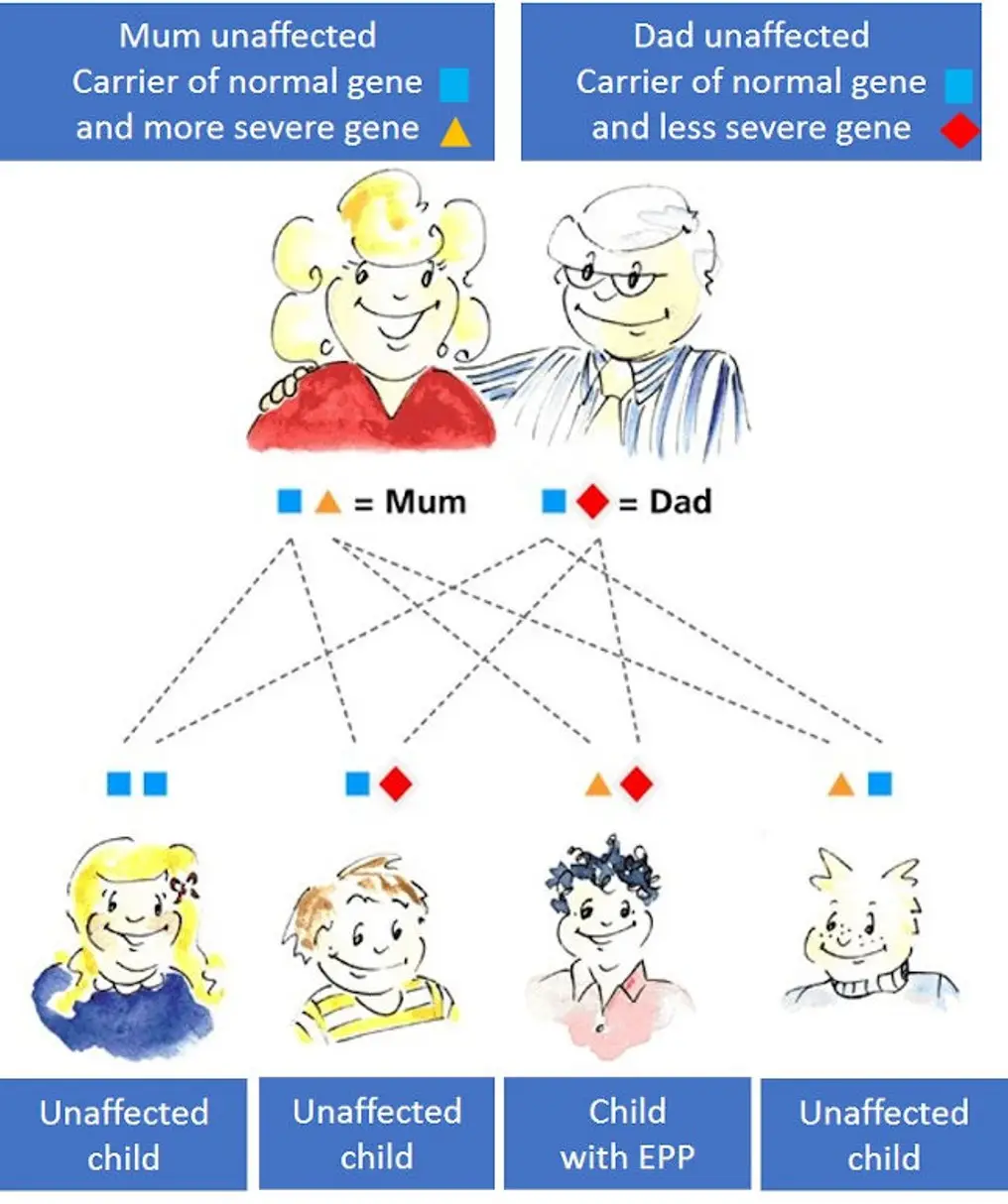
In EPP1, many patients do not know of other members of their family with the disease. This is because we all have two genes for ferrochelatase, one inherited from our mother and one from our father, and both genes have to be faulty to develop EPP1. Most EPP1 patients inherit a severely affected ferrochelatase gene from one parent and a less severely affected gene from the other parent. One abnormal ferrochelatase gene alone is not sufficient to cause EPP1. The more severely affected gene is very uncommon, but the less severe gene is present in about 10% of people in European populations. The more severe gene may be inherited down a family line but EPP1 does not occur until it “meets” the common but less severe gene again. This is why EPP1 sometimes skips generations before another family member develops EPP1.
If you have EPP1, the risk that your children will develop the disease depends on the genes your partner carries. If your partner belongs to the nine out of ten people who have normal ferrochelatase genes, there is virtually no risk. If your partner carries the less severe gene (a 1 in 10 chance), the risk of a child inheriting EPP1 is one in four. We recommend you ask a clinical genetics service or a porphyria specialist for advice on inheritance and genetic testing. We also recommend sharing the information with family members, especially siblings.
6.2. Inheritance of XLEPP
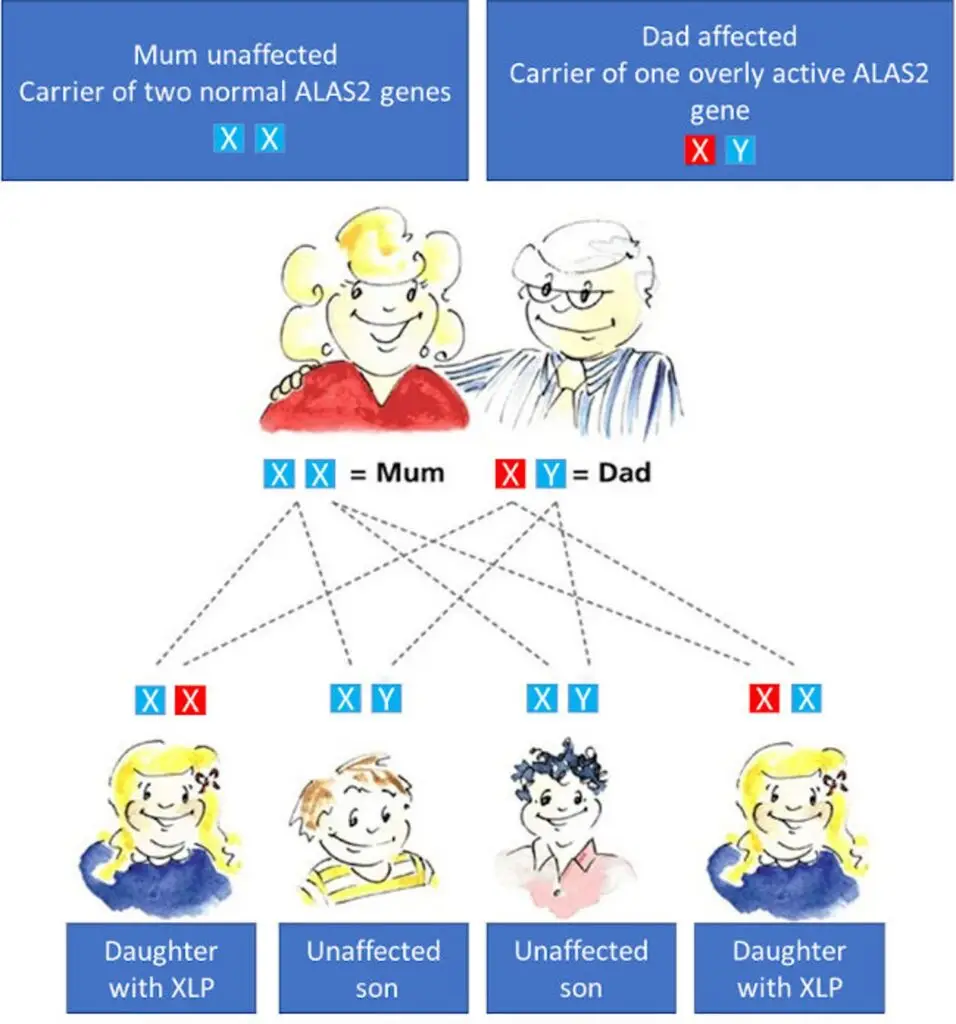
The gene for ALAS2, which is overactive in XLEPP, is located on the X-chromosome. This X-chromosome together with a second X or a Y chromosome decides the sex of a child (people with XX chromosomes are female, and those with XY chromosomes are male). In the case of XLEPP, one overly active gene is sufficient to cause an increase in protoporphyrin IX. Fathers with XLEPP will pass on their condition to all their daughters (100%), but cannot pass it onto a son (sons inherit their fathers unaffected Y-chromosome).
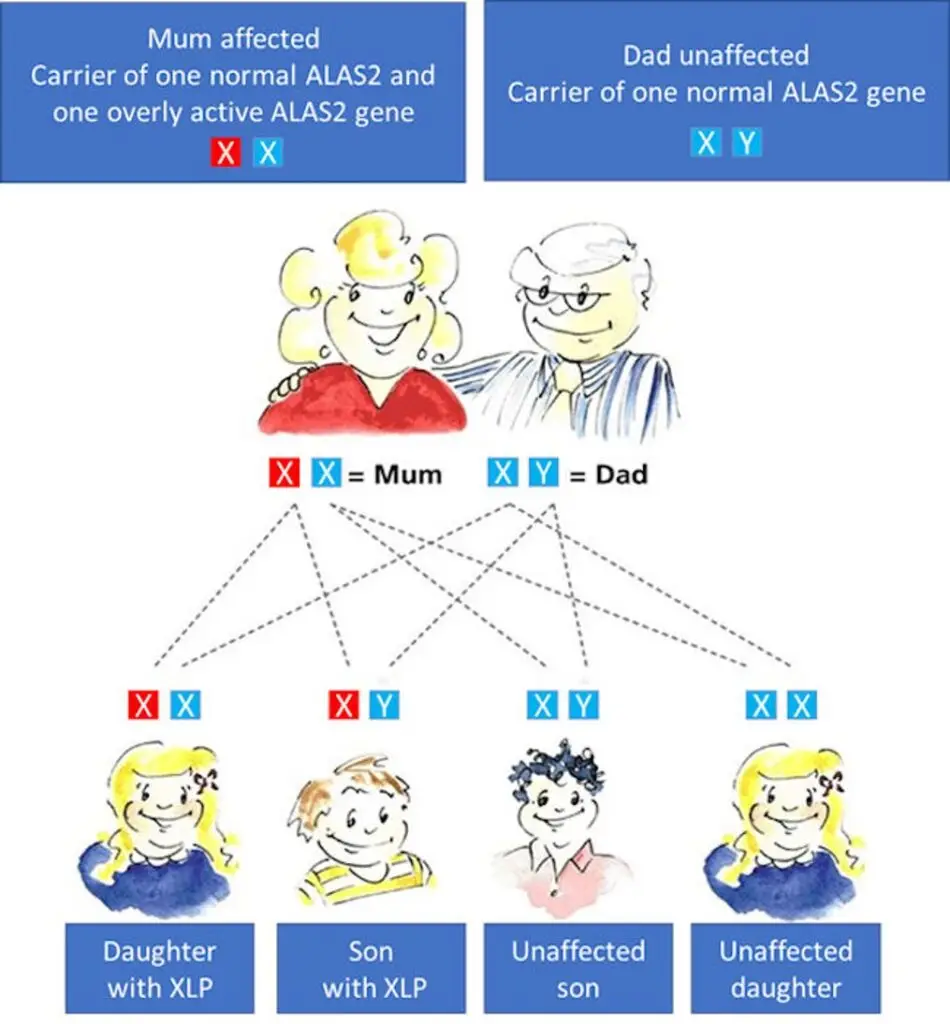
Mothers affected by XLEPP can pass on their overly active ALAS2 gene to both daughters and sons. On average 50% of the children of an affected mother are affected by XLEPP.
6.3 Inheritance of EPP2. This very rare form of protoporphyria is due to the inheritance of a mistake on one copy of the CLPX gene and is therefore an “autosomal dominant” condition. The condition can be passed on equally to sons and daughters.
6.4 Very rarely, EPP or XLEPP can occur later in life, often associated with an underlying blood malignancy.
7. Are protoporphyrias dangerous conditions?
A small number of patients with protoporphyria may develop liver damage. It is not possible to predict who will be affected but fortunately this complication is rare. Alcohol and viral hepatitis can increase the risk of liver disease. Hepatitis vaccinations and avoiding alcohol may help to reduce the risk. In patients with EPP1, additional risk factors include other liver conditions and iron suppletion (oral and injected). If you become more sensitive to light, become unusually tired or your skin or the whites of your eyes start to turn yellow, you should contact your doctor promptly so that liver function can be checked. Referral to an expert centre with experience with liver disease in patients with protoporphyria may also be appropriate.
Other complications
Gall stones are more common in people with protoporphyria and can develop at a younger age than in the general population. The symptoms can be different, for example backpain instead of abdominal pain.
Because protoporphyria patients avoid sunlight, they often have too little vitamin D, and their bones therefore contain less calcium than normal. This can increase the risk of fractures, including of the spine.
People with EPP1 often have mild anaemia, with lower than normal haemoglobin and iron levels. However, taking iron supplements can increase sensitivity to light, and iron supplements should only be taken when prescribed by your doctor (see below).
You should visit your doctor for regular check-ups – at least once a year. Your doctor may monitor your blood protoporphyrin IX, your vitamin D level, the way your liver is working, and other organ functions by yearly blood tests. The purpose of regular monitoring is to identify potential problems early, when they can often be managed more effectively. Your doctor can provide written information for the dentist, authorities like school and work, and family letters about inheritance.
Pregnancy
Pregnancy and child-bearing is not associated with any additional risks and the expected outcome for the baby is normal. Women with EPP1 often report that they can stay out longer in sunlight while they are pregnant (although iron intake during pregnancy can limit this positive effect). However, if the newborn baby develops jaundice and is at risk of inheriting protoporphyria, it is best to seek urgent expert advice from a porphyria specialist. Care should be taken with light therapy for the jaundice whilst the baby is urgently tested for protoporphyria.
8. Protection from light in protoporphyria
Patients with protoporphyria try to avoid unnecessary exposure to sunlight and strong artificial light sources. Protective clothing such as hats, long sleeves, gloves and trousers are beneficial. Dark and closely woven fabrics protect better than thin clothes with light colours. Sunscreens mainly protect against UV radiation and do not protect against light that causes protoporphyria symptoms. Glass windows in houses and cars offer no protection since harmful visible light passes through most windows. Employers and educators should be informed about the diagnosis and the need for special requirements, such as a desk away from windows in schools and the right to retreat from outdoor activities.
9. How can protoporphyria be treated?
Afamelanotide (Scenesse®) is currently the only treatment for which safety and effectiveness have been demonstrated in clinical trials. It is authorised for use in the European Union in Australia and the USA. Afamelanotide is administered as an implant which is injected under the skin above the hip every two months. Mild side effects have been reported. Patients are not cured with this treatment, and symptoms can restart before they can have their next implant. But the treatment significantly increases the time patients with protoporphyria can spend outdoors without pain and improves quality of life in most patients.
Substances and interventions with currently unproven effectiveness
A variety of interventions and substances have been used to improve the symptoms of protoporphyria, although safety and effectiveness have not been studied through formal clinical trials. The most commonly used substances and interventions are discussed below.
- Beta-carotene
Beta-carotene used to be prescribed for protoporphyria but few people with protoporphyria found taking it helpful. Beta-carotene is derived from the chemical that makes carrots orange and usually give the skin a slightly orange tone. You should discuss the risks and benefits of this option with a porphyria specialist before embarking on treatment. - Antihistamines
Antihistamines, which are mainly used for allergies, may help in case of a mild reaction. Some patients report an additional beneficial effect of hydrocortisone cream on red or swollen skin. Though many patients are unable to tolerate anything being put on their skin. Older antihistamines that have drowsiness as a side-effect, may provide some support in managing to sleep after a mild phototoxic reaction. - Phototherapy
Narrow-band UVB therapy is ultraviolet light treatment that is given for different skin conditions in dermatology departments. In protoporphyria they have been used to increase light tolerance by allowing the skin to thicken slightly and develop a tan. Therapy involves careful exposure to increasing doses of controlled UVB radiation, usually three times per week for at least five weeks during the spring. This may be impractical and inconvenient for some patients. Phototherapy should always be directed by a trained photodermatologist. Patients are strongly advised not to use self tanning salons, as these light sources can trigger phototoxic reactions. - Research into protoporphyria has increased considerably in recent years. Several new treatments are being tested in clinical trials around the world, and researchers continue to improve understanding of the disease and its long-term effects. While afamelanotide remains the only licensed treatment in many countries, there is genuine hope that additional treatment options will become available in the near future.
10. Supportive therapies and interventions
- Relief from a painful phototoxic reaction
The severe burning pain in skin after light exposure is difficult to relieve. Many people with EPP report temporary relief by cold baths, cold wet dressings or remedies such as aloe vera. Some report some relief from the pain by warm water or vapour (steam). No pain medicine is especially effective, even opiate-based pain relief. The choice and trying out of pain medicines should be done together with your doctor. - Vitamin D
Vitamin D is mainly produced in sun exposed skin, but it can also come from food such as oily fish, eggs, meat and cereals. Individuals who avoid the sun often develop vitamin D deficiency and all protoporphyria patients should take vitamin D at the recommended dose. A lack of vitamin D can have negative effects on bone health and other functions of the body. - Iron supplements
- Many people with protoporphyria have slightly low iron (ferritin) and haemoglobin values. It may therefore be difficult for doctors to figure out if you have a true iron deficiency anaemia and need iron supplementation. Being able to compare with previous blood and iron values helps. Iron deficiency that is causing symptoms due to anaemia should be treated, but supervised by a specialist porphyria treatment centre.
In EPP1, iron supplementation may speed up the production of red blood cells in the bone marrow and increase the protoporphyrin IX levels in the blood. Via this mechanism iron intake in any form may lead to increased sensitivity to light and might cause liver damage. Therefore, most specialised porphyria treatment centres recommend to use low doses of oral iron (not via infusions),preferably in winter, and to monitor protoporphyrin IX and liver health.
In people with XLEPP (in contrast to EPP1), iron supplements can lead to a reduction in blood protoporphyrin levels. Iron should be supplemented until the lowest protoporphyrin level is reached.
- Sunscreens
As visible light causes the problems in protoporphyria, widely available sunscreens that protect against ultraviolet light (particularly UVB) are not very effective. Some sunscreens contain zinc oxide, which can also block part of the visible light spectrum and may offer some level of protection. Patients should look out for products that contain zinc oxide or sunscreens that are designed to cover a broader light range, including the High-Energy Visible (HEV) light range (often called blue-violet light) which encompasses around 380 to 500 nm in the visible spectrum. These may offer some protection for those with protoporphyria. - Light filters
Most window filters for cars and offices are designed to block ultraviolet light. Even if they are tinted in smoky or grey colours, they let most of the visible light pass through. Filters that selectively block the most harmful light in protoporphyria are yellow. These filters can be applied to windows in homes, schools or offices or even on car side windows. Before applying films to car windows, you should check with traffic authorities to find out which films are acceptable according to local traffic laws. - Liver protection
Avoidance of overconsumption of alcohol or other substances (including drugs) that can damage the liver and result in liver disease is strongly recommended. It is also recommended to ensure vaccination against hepatitis A and hepatitis B.
11. Additional information
- Can certain drugs worsen protoporphyria?
The protoporphyrias differ from the so called acute porphyrias, because patients with an acute porphyria can develop neurological symptoms when using certain medications. Unless allergic to a medication, individuals with protoporphyria can take any form of medication that their health requires. However caution is warranted with iron suppletion, and medication that is potentially toxic to the liver. - Laser treatment
Laser treatments for eye surgery or hair removal have not been reported to be a problem in protoporphyria. The blue lasers used for dental cavity repair can cause burns in the gums. Dentists should be informed of the protoporphyria diagnosis so that they can direct the laser beam with care. - Light sources in health care
Covering operating lights with special filters is not necessary for most operations. Examination of the inside of the body using a lighted, flexible instrument called an endoscope can be safely performed. However health care staff should always be told that you have a diagnosis of protoporphyria and to minimise unnecessarily powerful lighting for longer surgeries, and during endoscopies. For very long operations the risks and benefits should be balanced, and preventive measures can be considered with advice from a porphyria specialist. -
12. Can protoporphyria be cured?
At present there is no cure for protoporphyria other than bone marrow transplantation. This treatment is associated with such high risks of complications and even death that it is only used in very special and complicated situations.
13. Where can I get more information about protoporphyria?
The information on this website has been written and updated by a group of porphyria specialists working together in an IPNET working group (including two EPP patients), and the information is checked by representatives of patient organisations.
Although several other sources of information can be found on the internet, they may not have been written or examined by porphyria specialists.
Patient associations can be a good point of contact for information, networking and support. Porphyria patient groups in different European countries are listed on the International Porphyria Network and the Global Porphyria Advocacy Coalition (GPAC) website.
Revised July 2026
