
Acute porphyria is a term that includes three similar, rare inherited conditions: acute intermittent porphyria (AIP), variegate porphyria (VP) and hereditary coproporphyria (HCP), and a fourth extremely rare porphyria called ALA-dehydratase deficiency porphyria. They are grouped together because acute attacks of porphyria may occur in each one. Acute intermittent porphyria is the most common type of acute porphyria. Acute attacks may occur in this condition, but the skin is not affected. People with variegate porphyria and hereditary coproporphyria may experience acute attacks and/or skin problems, but not necessarily at the same time.
Attacks and skin problems only affect a very small proportion of people with acute porphyria and most never have any symptoms at all.
2. What is an acute attack of porphyria?
Acute attacks almost always start with severe pain, which is usually in the abdomen but may also be felt in the back or thighs. Nausea, vomiting and constipation are common. Some people have difficulty sleeping or become agitated or confused. Pulse rate and blood pressure are often increased. In severe attacks, there can be complications such as convulsions, or muscular weakness which may occasionally lead to paralysis. An acute attack usually lasts for no longer than one or two weeks. Severe attacks can occasionally be life threatening if there are serious complications like paralysis. Most patients recover from paralysis provided they receive appropriate treatment, although this takes many months.
Acute attacks are often provoked by medications, alcohol, and hormonal changes, for example, those associated with the menstrual cycle. Infections and stressful situations (emotional or physical) may also trigger an acute attack.
The most common age for an acute attack is from the late teens to the forties. They are extremely rare in children before puberty. Women are about five times more likely to have an acute attack than men, mainly due to female hormones. Most people have only one or a few acute attacks in their whole life. Only a minority suffer repeated – often called recurrent – attacks, sometimes over several years. Most people who have one or a few attacks of acute porphyria make a full recovery. They are then able to lead a normal life except they need to take a few simple precautions to reduce the risk of having another attack.
3. How is acute porphyria inherited?
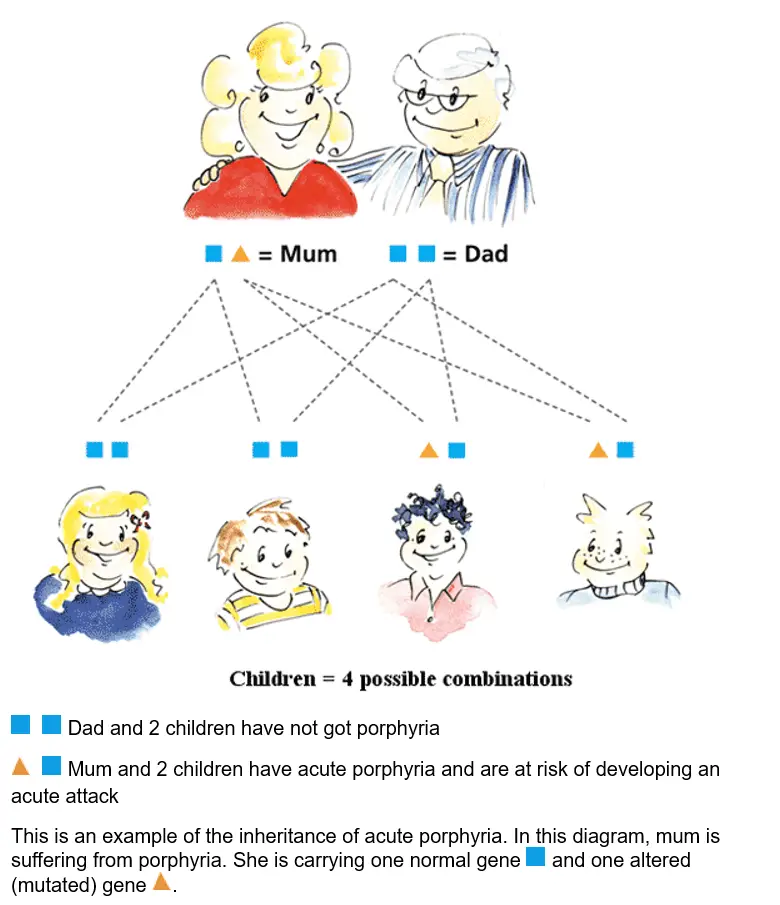
Acute porphyria is caused by a change to a small part of the DNA (the inherited material in the body) known as a gene; a different gene is affected in each of the different types of acute porphyria. Genes, which contain the blueprint for all the components required by the body, usually occur in pairs. One of each pair is inherited from each parent. Sometimes a small error can occur in the copying of one of these genes resulting in a permanent gene change (called a variant or mutation). When a variant in only one of the pair of genes causes a disease, as is the case in the acute porphyrias (AIP, HCP, VP), this is called an autosomal dominant inheritance pattern.
How is acute porphyria inherited?
© Illustrations copyrighted Clare Hollest
The risk of an affected person passing this variant gene on to any of his or her children is one chance in two (50%) (see diagram). This risk is the same even if the affected person has never had any symptoms of porphyria, so the disease often appears to have “skipped a generation”.
Each person with porphyria may have relatives who also inherited the altered gene. Some may not know that they have inherited an acute porphyria gene and are at risk of developing porphyria symptoms.
If you have not inherited the altered gene, you cannot pass it on to your children. The extremely rare condition, ALA dehydratase deficiency porphyria, is inherited in a different way. The condition arises if someone has two copies of the gene variant, one inherited from each parent and is known as an autosomal recessive condition.
4. What is the risk of symptoms among those who have inherited an acute porphyria gene?
Most people who inherit an acute porphyria gene will never experience an acute attack. In those who do become unwell, additional factors are usually required to trigger an attack. Our knowledge of these factors (triggers) is incomplete, but among the most important are hormonal fluctuation in women, certain medicines, alcohol, stress, fasting or reduced calorie intake and infections. Attacks are more common in women of child-bearing age due to normal hormonal changes during the menstrual cycle or during pregnancy. One trigger on its own may not cause an attack, and many attacks result from a combination of triggers. Sometimes acute attacks occur in the absence of any identifiable triggers. However, experience has shown that if people who have inherited an acute porphyria are careful to avoid known triggers, their risk of having an attack is much reduced.
5. How is an attack of acute porphyria diagnosed?
To diagnose an attack of acute porphyria and identify the type of porphyria, samples of urine, blood and stool (faeces) need to be tested in a specialist laboratory with expertise in porphyrias (usually porphyria specialist centres). The tests measure the concentration of porphyrins and their precursors ALA and PBG which will be very high during an acute attack. It is important that these tests are carried out as soon as possible after the start of the illness as making an accurate diagnosis may be more difficult after recovery, particularly after several months or years.
In a patient who is known to have inherited an acute porphyria, it may be difficult to decide whether symptoms are due to an acute attack or another cause. In this situation, a urine test may help your doctor decide whether you are having an acute attack.
It is important that people with porphyria do not assume that all their symptoms/illnesses are due to porphyria, otherwise common but potentially serious conditions, such as appendicitis, may be overlooked.
6. When is the best time to be tested for acute porphyria?
The best time to be tested for porphyria is at the earliest opportunity. In practice, this means that families should be offered screening for acute porphyria soon after a relative has been found to have the condition. When a parent is already known to have an acute porphyria, their children should be tested, ideally before puberty. In some countries babies can be tested at or soon after birth. It is extremely rare for children to have a porphyria attack but there are two main advantages of early diagnosis. First, those who are found to have inherited an acute porphyria can be advised about how to reduce their risk of an acute attack. Second, if an acute attack does develop, your doctor will be able to confirm the diagnosis and start treatment promptly.
7. How are relatives screened for acute porphyria?
For relatives who have not had an acute attack, especially children, urine testing for porphyria is not helpful as it may give a negative result even when someone has inherited acute porphyria. For many families, it is now possible to use genetic tests to detect the gene variant that causes their porphyria. Genetic (DNA) tests are the most reliable way of testing for porphyria in relatives of an affected person. Your doctor will be able to help you arrange testing and this may involve referral to a porphyria specialist centre or genetics clinic.
8. What can I do to reduce my risk of having an acute attack?
Some acute attacks are precipitated by avoidable factors such as medication, alcohol, fasting or dieting.
Medications
People with acute porphyria must take care with medications, as certain medicines increase the risk of having an acute attack. It is important to check the safety of any medicine or remedy before you take it in non-urgent situations. This includes prescription medicines as well as over-the-counter treatments, supplements purchased over the internet, tonics and herbal remedies, some of which have been known to cause attacks. Although many commonly prescribed drugs are considered unsafe or possibly unsafe in porphyria, suitable alternatives can almost always be found.
Even though acute attacks are very rare before puberty, it is safest for children who have inherited acute porphyria to use medications known to be safe in porphyria.
Sometimes people with porphyria need a particular medication for a serious illness (such as epilepsy), that is not known to be safe in porphyria. The risk of triggering an attack varies from person to person but is generally higher in those with more active disease. When doctors prescribe medicines that are not known to be safe in porphyria, they will consider the expected benefits, available safer alternatives, and the individual’s risk of an acute attack. Your doctor may discuss the particular situation with a porphyria specialist, and may monitor your porphyria if the drug is prescribed.
Reactions such as dizziness, feeling faint, allergies or short-lived skin rashes, which may occur immediately or very soon after taking a drug are common and are not related to porphyria
In an emergency, a necessary drug should not be withheld because of concerns about whether or not it is safe in porphyria.
Up-to-date information on the safety of medicines in acute porphyria is available from specialist drug databases (for example, the Acute Porphyria Drug Database).
Alcohol
There is evidence that alcohol can trigger acute attacks, so you should avoid alcohol if you have had recent attacks or porphyria symptoms . People with active porphyria are advised not to drink any alcohol at all. Even if you have never had a porphyria attack, it is sensible to keep alcohol intake low and avoid binge drinking. For those without symptoms, alcohol should be kept in line with general health guidance.
Diet
Low calorie diets (particularly extreme diets and diets cutting out carbohydrate), prolonged periods with little or no food, and weight-loss injections or weight loss surgeries may trigger an acute attack. It is therefore important to maintain a balanced diet with regular meals, eating enough to keep a healthy body weight.
People with active porphyria (recent attacks or recurrent attacks) are generally advised to avoid planned weight loss, including strict dieting, weight loss injections, or weight-loss surgery. If you are overweight and wish to lose weight, you should ask your porphyria specialist for advice about a diet that will allow you to lose weight gradually and safely.
For those without porphyria symptoms or recent attacks, gradual and carefully managed weight loss may be possible, but crash dieting and rapid weight loss should be avoided.
Referral to a porphyria specialist is recommended before considering weight-loss surgery in all people with acute porphyria, even those without symptoms..
For patients struggling with nausea or sickness, smaller meals or snacks eaten more regularly can be helpful. Patients with severe porphyria, particularly those who have recurrent attacks, may need special dietary advice from their doctor or a dietician.
9. Surgery, dentist, vaccinations
Anaesthetics and surgical operations
All people with acute porphyria should tell their surgeon and anaesthetist in advance of treatment that they have an acute porphyria. It is particularly important that healthcare professionals are aware of the drug restrictions, and take steps to avoid prolonged fasting before surgery. Short periods of fasting, for instance overnight for morning surgery is unlikely to cause problems.
Dentist
People with acute porphyria should inform their dentist that they have porphyria and make sure they are aware of the relevant drug restrictions.
Vaccinations
There is no evidence that vaccines cause problems for people with acute porphyria. It is recommended that individuals with acute porphyria receive vaccinations in line with national guidelines and practice.
10. Particular issues for women
Women are about five times more likely than men to experience an acute attack, due mostly to female hormones, particularly progesterone. This hormone is found in the combined oral contraceptive (the pill), as well as in contraceptive implants, contraceptive injections and hormonal intrauterine devices (hormonal IUDs). It is also found in hormone replacement therapy (HRT) which may be prescribed for post-menopausal women.
Contraception
Contraceptive injections and implants carry a high risk of triggering attacks and should be avoided in all women with acute porphyria.
Oral contraception should be avoided where possible, particularly in women with active acute porphyria (those with recent attacks or repeated attacks). For women who have no symptoms (latent or asymptomatic porphyria), oral contraceptives may sometimes be considered if other options are not suitable, but this should be discussed with a porphyria specialist and appropriate monitoring arranged.
Hormonal IUDs which release small amounts of progesterone directly into the womb, are generally well tolerated and are often recommended as a first-choice contraception for women with acute porphyria, including those with active porphyria.
Barrier contraceptives (condoms, caps, diaphragms and non-hormonal IUDs) are safe in all women with acute porphyria.
HRT
HRT is usually well tolerated in postmenopausal women with porphyria but this should be discussed with your porphyria specialist and additional monitoring may sometimes be required.
Topical treatments (e.g. gels, creams, and patches) are preferred over oral (e.g. tablet) treatments. This is because less of the medicine is absorbed into the blood when put on the skin.
Pregnancy
Most pregnancies are uneventful, but there is a small increased risk of having an acute attack during or after pregnancy. The chances and dangers of an acute attack are lower if porphyria has been previously diagnosed. It is very important for the doctors providing care during pregnancy to know that you have an acute porphyria. It is recommended that additional monitoring is put in place for you and your baby.
11. Treatment of acute attacks
Importance of early recognition and accurate diagnosis:
Early recognition of an acute attack allows treatment to be started as soon as possible. The first symptoms are often easily recognised by those who have previously experienced an attack. If you think you have early symptoms of an attack, you should try to continue eating and drinking if you can, and it may be helpful to boost your intake of sugary and starchy foods. You should not drink any alcohol. If you have recently started taking new medication, you should check that it is on the porphyria safe drug list, and if it is not, discuss with your doctor whether an alternative treatment would be possible.
Recognising porphyria symptoms is more difficult for people who have inherited an acute porphyria but never experienced an acute attack. It is understandable that many people worry about aches and pains, but these usually turn out to be due to other causes. People with acute porphyria commonly experience abdominal discomfort, just like those who do not have the condition, and a doctor will need to consider all potential medical conditions which may be causing symptoms, including bowel problems, urinary infections and abdominal emergencies such as appendicitis that may need urgent treatment. In this situation, a diagnosis of acute porphyria can usually be confirmed or excluded by testing the urine for PBG.
Treatment of an acute attack:
If you think you may have early symptoms of an acute attack, you should contact your doctor (or your porphyria specialist if you have one) to help you decide if you need to be admitted to hospital. If your symptoms are severe, you should attend hospital straightaway. This will allow:
- Administration of medicines to treat the various symptoms accompanying the attack. These treatments are likely to include the use of drugs to relieve pain, sickness and constipation. It is also important to maintain an adequate intake of calories and fluids which may require an intravenous drip.
- Biochemical diagnosis of the acute attack by measuring PBG (and if possible ALA) in a light protected urine sample.
- Exclusion of other causes of your symptoms
- Early start of specific treatment of the acute attack with intravenous human hemin (Normosang/haem arginate or Panhematin). Human hemin is the first-choice treatment when this is available.
- Carbohydrates (oral or through a glucose drip) can be used as a short-term option for mild or early symptoms, or while waiting for hemin treatment to start. If intravenous hemin is not available, carbohydrate is the best treatment for an attack but this is far less effective than hemin.
Warning: a glucose drip can lower sodium levels in the blood (hyponatraemia), which can be dangerous. Glucose drips should be avoided in patients with severe hyponatraemia.
12. Recurrent attacks of porphyria
A small number of patients, mostly those with AIP, develop a pattern of recurrent attacks, usually defined as four or more confirmed attacks, typically severe enough to require hospital admission for treatment, in a maximum period of 12 months. In women, these attacks may be related to the normal hormone changes during the menstrual cycle with symptoms typically starting in the week or so before menstruation. However, in many patients, there is no clear trigger for their attacks.
Patients with recurrent porphyria attacks should be referred to a specialist porphyria centre, if possible. Careful assessment is needed to confirm that symptoms are due to porphyria and to identify any avoidable triggers before starting long-term treatment to prevent attacks.
In the past, patients with recurrent attacks were often treated with regular infusions of haem/hemin to try to prevent attacks. Liver transplantation is effective but only considered in very severe cases where other treatment options have failed.
A new treatment, givosiran (an RNA interference therapy that works by reducing the production of harmful porphyrin precursors in the liver), is now the first choice to prevent attacks in patients with recurrent attacks. However, it is not available in many countries, and treatment decisions will depend on individual circumstances.
In some situations, givosiran treatment may be considered in patients who do not have frequent (recurrent) attacks, but are at high risk of serious complications from further attacks. This decision should always involve discussion with a porphyria specialist, taking into account the individual’s circumstances and potential risks and benefits.
NOTE: Givosiran is used to help prevent future attacks. It is not a treatment for an acute attack and will not reverse complications such as nerve damage. Its use in people with only occasional attacks is still being studied.
Givosiran is a high-cost drug. Its use is limited in countries where it is available and in many countries it is not available at all.
13. Chronic pain
Some patients with porphyria, particularly those with recurrent acute attacks and those who had severe porphyria attacks in the past, experience almost continuous pain. This is believed to result from damage to nerves caused by previous attacks. This chronic pain usually varies from day to day and may be severe. Flares of chronic pain may be difficult to distinguish from acute attacks. Chronic pain responds poorly to haem/hemin and to opiate-based pain relief, but medication used to treat nerve pain may be helpful. Some patients benefit from referral to a specialist pain management service.
14. Skin problems
The skin is not affected in acute intermittent porphyria. Skin problems occur in 10-20% of adults who have inherited the gene for variegate porphyria and are often their only porphyria symptom. Areas of skin exposed to sunlight, particularly the backs of the hands, the face and the feet, can blister, become fragile and tear easily. Identical skin problems may rarely occur in hereditary coproporphyria. Skin problems in both variegate porphyria or hereditary coproporphyria may occur with or without acute attacks. Protecting exposed skin from sunlight with suitable clothing is the best way to prevent these skin problems. Most conventional suncreams are not helpful.
15. Long term follow up
People with acute porphyria, especially those who are most severely affected, are at risk of some long-term complications including high blood pressure and reduced kidney function. There is also an increased risk of liver cancer in older people, particularly those who had attacks in the past.
Ideally, all individuals with acute porphyria should have at least one appointment with a porphyria specialist. This allows discussion of the condition, assessment of individual risk, and advice on management, including family testing where appropriate.
People with active porphyria or persistently raised levels of porphyria markers PBG and ALA in the urine (high excreters) are usually followed up regularly by a porphyria specialist. Follow-up care is likely to include review of symptoms and recent attacks, monitoring of medications and lifestyle factors, and regular tests such as blood pressure measurement and blood tests to assess kidney function.
It is recommended that patients over the age of 50 who have had attacks and/or raised urine ALA or PBG in the past undergo surveillance for liver cancer, for example with regular liver imaging.
For people without symptoms, the need for ongoing follow-up may vary depending on individual circumstances and available resources, but access to specialist advice remains important.
16. Conclusion
Most people who are found to have an acute porphyria can lead a normal healthy life provided they take some simple measures to reduce the risk of attacks, as described above. Even the few who do become unwell usually make a complete recovery and have no more than one or two acute attacks in early adult life. As one grows older, the risk of an acute attack decreases, particularly after the age of forty, but it never completely disappears.
Date of last update: April 2026