1. What are porphyrias and how do they differ?
Altogether there are eight main types of porphyria which are usually classified by the type of illness they cause:
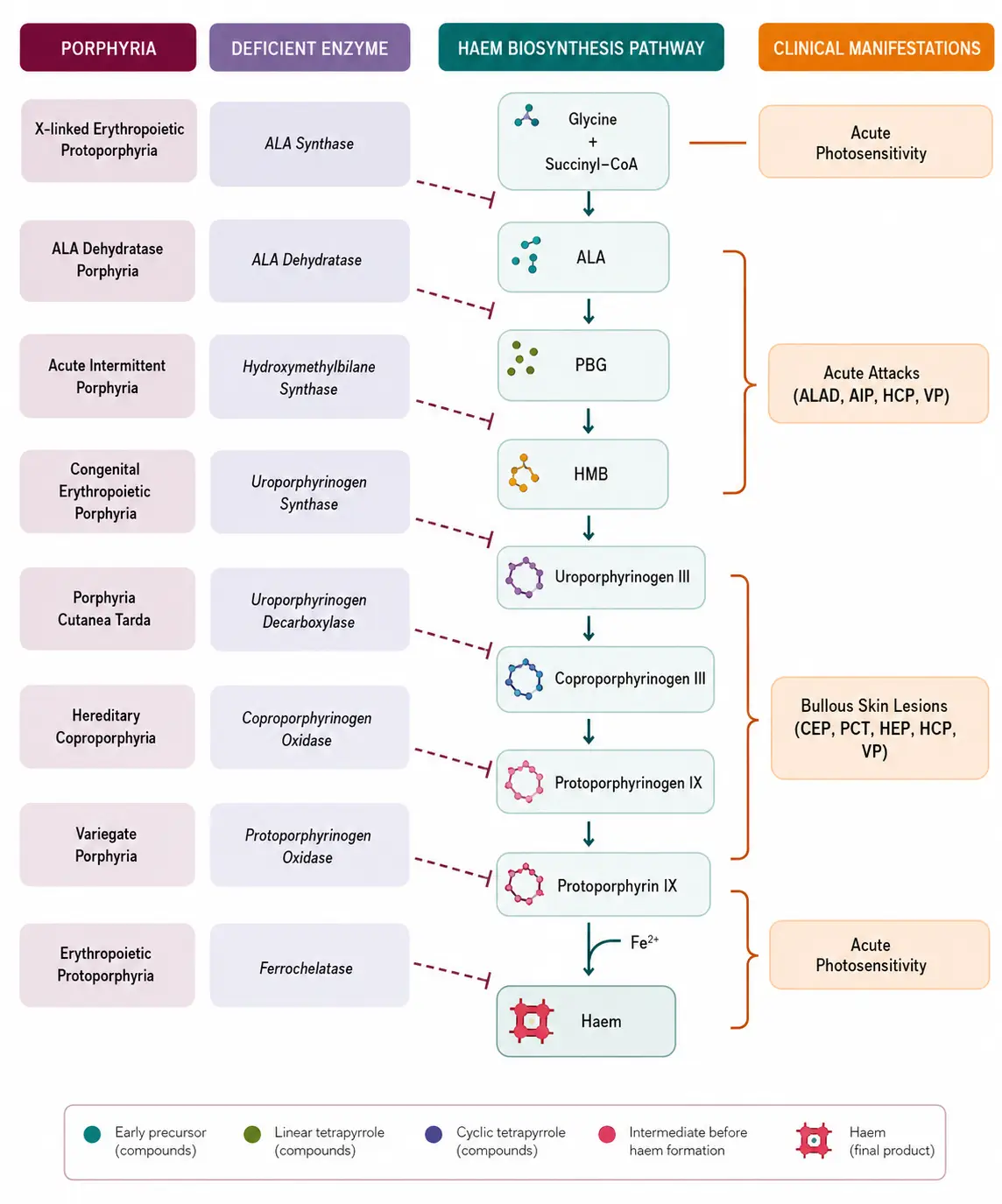
- There are four acute porphyrias: acute intermittent porphyria (AIP), variegate porphyria (VP) and hereditary coproporphyria (HCP) and a very rare porphyria called ALA dehydratase deficiency porphyria (ALAD). They are called acute because they cause attacks of severe pain and additional symptoms that last for several days. VP and HCP may also cause skin symptoms.
- The cutaneous porphyrias, porphyria cutanea tarda (PCT), erythropoietic protoporphyria (EPP), x-linked erythropoietic protoporphyria (XLEPP) and the rare congenital erythropoietic porphyria (CEP) (also known as Günther’s disease) affect mainly the skin.
The porphyrias may also be classified as hepatic or erythropoietic depending on the organ where the porphyrins accumulate, the liver for the hepatic porphyrias (AIP, HCP, VP, ALAD and PCT), or the bone marrow for the erythropoietic porphyrias.
2. Why are they called porphyrias?
They are called porphyrias because they cause accumulation of chemicals called porphyrins (purple-red pigments named from the Greek word for purple) or the simpler chemicals, often called “precursors” (5-aminolaevulinic acid and porphobilinogen, usually shortened to ALA and PBG) that are used by the body to make porphyrins.
3. Why are porphyrins important?
Porphyrins are important in the body because they combine with iron to form haem, a red pigment, which, after combining with proteins to form haemoproteins, has the vital function of enabling the body’s cells to use oxygen. Haemoglobin, the pigment of red blood cells, is the best-known haemoprotein. In other cells, haemoproteins are essential for respiration and many other functions, including helping the liver to process drugs and chemicals into active or inactive forms.
4. Why do porphyrins and precursors cause illness?
The porphyrias are caused by problems with enzymes (1) involved in making haem, with each type affecting a different step in the process (see haem biosynthetic pathway diagram below).
The acute porphyrias affect biochemical processes mainly in the liver. Accumulation of the simpler ‘precursor’ chemicals in the liver leads to acute attacks of porphyria. They do not cause blood disease or acute liver disease.
When porphyrins accumulate in the skin, they absorb energy from sunlight. This energy is then released and can damage the underlying layers of the skin.